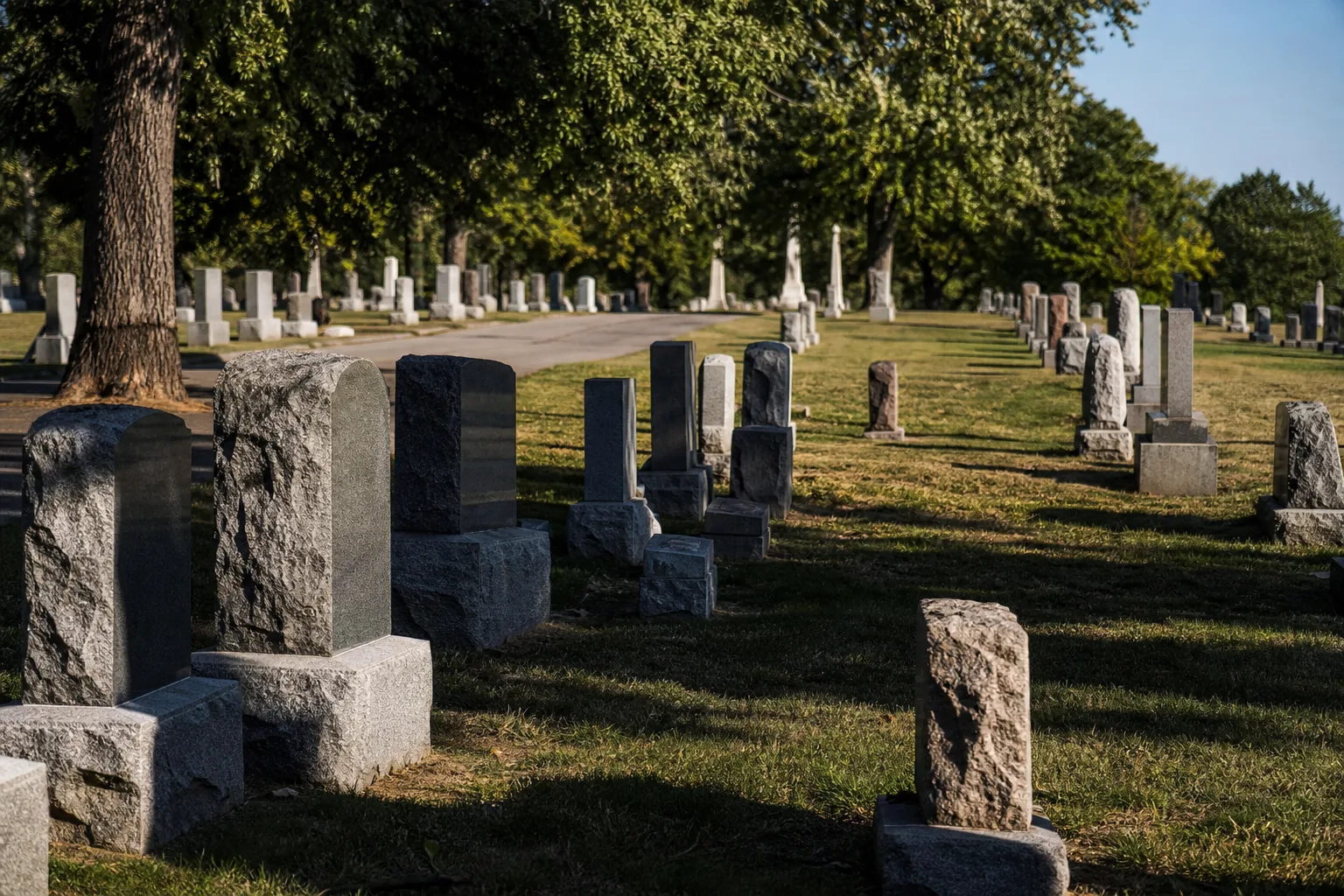
Cemeteries, not monument dealers, control what goes on a grave. Here is who has to approve a marker, in what order, and what happens when the paperwork skips a step.
The deposit is usually the first irreversible act, and it is often taken before anyone has confirmed that the stone being sold can lawfully be set on that particular grave. A monument dealer sells granite, lettering and installation labor. A cemetery decides height, material, footing, finish, placement, and whether a marker appears at all. Those are two separate authorities with two separate sets of paperwork, and the family sits between them holding the checkbook. A careful reader treats the cemetery as the governing body and the dealer as a supplier working inside rules it did not write.
Start with who owns the grave, not who is paying
Interment rights are a form of property, conveyed by a deed or certificate, and the person named on that document is the one the cemetery recognizes. That is frequently not the surviving spouse, and it is frequently a person who died years ago, leaving the rights to pass through an estate or by the cemetery's own succession rules. Ask the office to read you the name on file before you choose a design. If the record shows a deceased holder, the office will tell you what it requires: a death certificate, letters testamentary, an heirship affidavit, or signatures from a defined class of next of kin.
The definition of that class varies, and it is set by state cemetery statute in some places and by the association's bylaws in others. Some grounds want every surviving child. Some accept a majority. Some accept the personal representative alone. Get the standard in writing, because a form signed by the wrong relative is a form that fails on the day of setting, after the stone is cut and the inscription is permanent.
Read the section rules, not the general rules
Most cemeteries publish a rules-and-regulations booklet, and most of that booklet is general. The binding constraints are usually sectional. A lawn or memorial park section may permit only flush bronze on a granite base, set level with the turf so mowers pass over it. An older monument section may allow uprights but cap the height, restrict the die width to the lot frontage, or require a specific foundation depth. Veterans sections, cremation gardens, columbarium fronts and infant sections each carry their own schedule. Ask which section the grave is in, then ask for the sheet that governs that section specifically.
Material rules deserve the same attention. Some grounds exclude marble and limestone on grounds of weathering, some restrict polished black granite in sections built for gray, and many limit vases, photographs, ceramic portraits, benches and any element that projects beyond the base footprint. Colors, emblems and second languages are sometimes reviewed rather than simply permitted.
The approval sequence that keeps the stone in place
Order of operations is what protects the money. The cemetery issues a permit or work order against a submitted drawing showing exact dimensions, material, finish, inscription layout and placement relative to the grave line. The dealer prepares that drawing; the rights holder or authorized kin signs the consent; the cemetery stamps it. Only then does the shop cut. Ask for a copy of the approved drawing with the cemetery's endorsement on it, and keep it. Ask also whether the cemetery pours the foundation itself, since many reserve that work and bill it separately, and whether an installation fee, a setting fee, or a care and maintenance contribution applies.
Proof the inscription against a document, not a memory. Dates, spellings and middle names should match the death certificate, because corrections after carving are expensive and sometimes impossible without replacing the die.
What a burial ground can require after installation
A marker set without a valid permit is, in the cemetery's view, an unauthorized improvement, and the standard remedy is removal at the family's expense. Grounds also reserve the right to remove markers that exceed approved dimensions, sit outside the grave line, obstruct maintenance, or deteriorate into a hazard. Notice is typically mailed to the address of record, which is why keeping the office updated matters. Where a dispute exists among heirs, many cemeteries will simply hold the work until a written agreement or a court order arrives, and that pause is protective rather than punitive.
Federal oversight of funeral goods pricing sits with the Federal Trade Commission, which is responsible for the disclosure rules governing what sellers must itemize before payment. Cemetery placement rules, by contrast, are local, so read them locally.
Two documents settle nearly every later argument: the interment rights record showing who may authorize work, and the endorsed drawing showing what the cemetery agreed to. Request both before the deposit clears, and the stone that arrives is the stone that stays.